Hyakunin Isshu No. 4: White Cloth on Fuji’s Peak

By: Yamabe no Akahito (700 – 736)       山部赤人

At Tago Bay,                                                  田子の浦に
I’m hit by the sight of                                 うちいでて見れば
White cloth                                                    白妙の
On Fuji’s peak                                              富士の高嶺に
And falling snow                                         雪はふりつつ


DP141071

東海道江尻田子の浦略図 | 葛飾北斎

Surprisingly, there are no translation notes provided with this tanka.  The only information that I have is that the poet, Yamabe Akahito, was a contemporary for the poet for No. 3, and that he, like Kakinomoto,  was regarded as one of the greatest of the early poets and subsequently deified as a god of Poetry.  Looking up Tago Bay, according to the interwebs, Tago is a seaside town/village/place that is known for its amazing views of Mt. Fuji.  Tago is also one of the locations in the super famous Mt. Fuji/boat/wave art series (No. 36 in a series of 36 paintings), so it is most probably a place that Yamabe would have strolled along before being struck by inspiration to write this tanka.

In a way, it’s kind of refreshing to read a tanka that wasn’t inspired from some sort of intense emotion (I’m only on No. 4; by the time I get to No. 100 I’ll be all drained out of emotions haha).  It really shows how the Japanese people appreciated and enjoyed nature and the environment around them, I think, and how the beauty of the environment could connect so strongly to their spiritual selves or souls.  I know Western poets get inspired by the beauty of the environment too, but I’ve found that they don’t capture the simplistic depths of nature and its reflection on the human spirit quite as well as Eastern poets.  This tanka, in any case, paints such a reverential scene of falling snow, and it could mean something deeper, with the cleanliness of snow and the passage of winter, or it could just be a poet enjoying the scenery as he walks along the shores of Tago Bay.
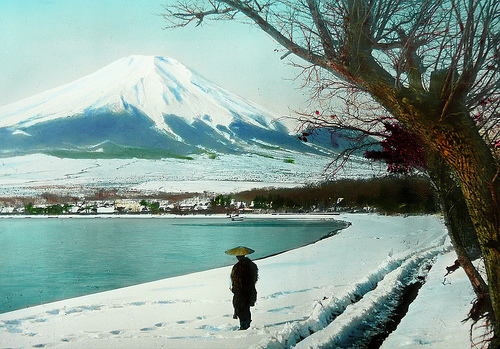
T. Enami | Flickr

Morning Light on the Shores of Lake Yamanaka | T. Enami
Passing on the torch

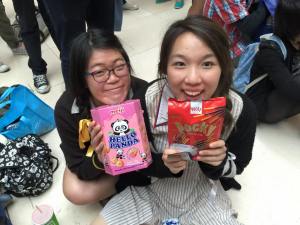
I attended my first event for JASS UTS as a member the other day.  It was a city-wide Scavenger Hunt, and it involved many hours of preparations that I didn’t have to do.  And it felt so weird.  I didn’t have to get to the event five hours early to prep or brief, I didn’t have to run around making sure things were running smoothly, I didn’t have to check that people were where they were supposed to be at the supposed times… I just had to follow instructions and finish all the tasks given to me.

And it felt so liberating.

I mean, for the first time in forever, I was mingling with members without needing to direct them in whatever, I was doing whatever I was told without needing to figure out logistics, I could be crazy and do random stuff and it was okay because I wouldn’t (maybe) scare any members away.  I was getting surprised by the challenges, and I got to tease the friends organising each challenge, because, you know, friends.

But it felt so… lacking.

I didn’t know every single detail related to the event, I didn’t know everyone who was participating, I couldn’t troll people during each challenge because I didn’t know what was happening.  And not knowing, and not having responsibilities, and not needing to do anything after to wrap up properly felt like a part of the day was missing.  I wasn’t on call.  I wasn’t needed.

I was just another member.

Having been an exec and organising every single event I’ve been to for the club, it’s like what I imagine culture shock feels like, but you know, instead of offending other people with your lack of etiquette, you’re offending your own sensibilities.  At the same time, even though I was just another member, my teammate and I were looked and regarded by the other teams with expectation.

“They’re previous execs.  They’ll ace it, even with only just two people.”

“You’re going to get helped anyway because priviledges.”

It didn’t help that most of the participants thought that we were somehow related to the event, and that some of them actually mistook us as organisers for the event.

And it hit me, for reals, right in the kokoroh, that I’ve passed on the torch to somewhat capable hands.

And now that it’s passed on… I hope they don’t blow out the torch.

But since we somehow landed a third place in the Scavenger Hunt, they must be doing their job right.

Team JEM | JASS UTS

Our prizes!! :D Team JEM | JASS UTS

On the Road to Japan, Pt. I

Apparently, I’m to live by myself.

I’m to live by myself, in a 16 square metre room, with my own bathroom, my own fridge, my own landline, but to cook, or to watch T.V., I will need to socialise with other people on my floor because that’s communal.  (I really hope my eventual floormates know how to clean after themselves, because I really don’t want to cook in a dirty kitchen… and I hate cooking already dirty dishes aren’t going to help increase my motivation at all.)

Despite knowing where I’m living, and knowing how much rent I’m paying, I’m yet to know when I get there.  Of course, I know that the time frame for my departure to the Land of the Rising Sun is sometime in late March or super early April, but the exact date? I’ll find out early-mid March.  Which gives me maybe two weeks between knowing when I leave, and actually leaving.

Only two weeks?  Some people, like my mama, might think, outraged.  Only two weeks to prepare for a year away??! Two weeks to apply for things and get everything ready??!!? That’s not even enough time to prepare for a one-day party, let alone a year!!!!!111!!one!

I used to think that too.  But now that I’m in this position, just waiting for things to happen… I think… not knowing is okay.  I feel like knowing the exact dates for when I leave will make it seem final.  I’ll have to finally finish cleaning my room.  I’ll have to make sure I finish all my snacks in my room.  I’ll have to start saying ‘See you in a year!’ to people I don’t see for years anyway.  But, at the moment, without an actual date, my imminent departure is just floating around in the air, as an eventual someday-it-will-happen rather than a final goodbye-dear-friends-miss-me-a-bit-see-you-in-a-year.

But since I can’t really just sit here and do nothing for the weeks leading up to it until I find out when I leave and start swearing at how much I need to do and how much I haven’t done… what can I actually do?

For one thing, I’ve started studying.  Just so I can say more than just すみません (excuse me) and 日本語を分かりません (I don’t understand Japanese) to people.  I’ve exchanged some $$ for ¥¥.  And I’ll go and open a magical no-transaction-fee, usable-in-fifty-million-countries bank account, just so I can avoid opening up a Japanese bank account and trying to understand what the heck they’re saying about terms and conditions when I don’t even really understand half of what the terms and conditions are when I open an account in Australia.  Where they speak English.

In any case, things are happening, and time is passing, and eventually I’ll know the date for flying to Japan and I’ll start panicking at how little I’ve actually cleaned my room, but for now, I’ll just slowly work my way through the days and enjoy all the little moments that life has to offer.

Like 20 degree weather in the middle of an Australian summer.

Hyakunin Isshu No. 3: If I’m to sleep alone

By: Kakinomoto no Hitomaro (662 – 710)                 柿本人麻呂

On a mountain slope                                                        あしびきの
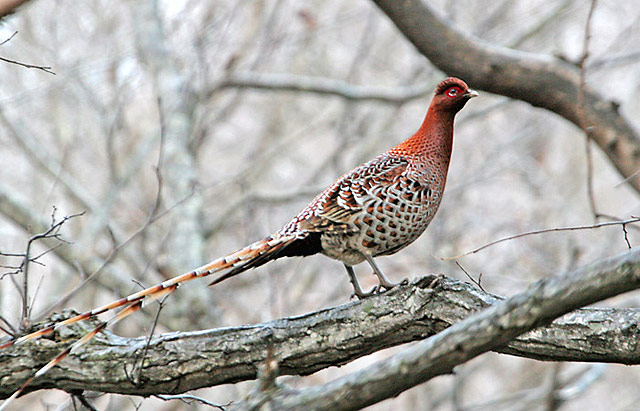
The copper pheasant’s tail                                            山鳥の尾の
Just flows and flows –                                                      しだり尾の
So long, like this night                                                     ながながし夜を
If I’m to sleep alone                                                          ひとりかも寝む


Legend has it that poet gained his name because he was found at the foot of a kaki, or persimmon, tree as an infant and subsequently adopted. As an attendant of Emperor Monmu, the grandson of Empress Jitou (the poet of No. 2), Kakinomoto no Hitomaro had plenty of opportunity to demonstrate his poetic prowess.  He definitely showed off his skills, because he became known as one of the great poets of early Japan, and after his death was deified as a god of Poetry, complete with temples dedicated to his name.

In this tanka, the translation notes merely say that the night will seem to be as long as the tail of the copper pheasant if he cannot be with his lover tonight.  However, the fourth line can be interpreted as also ‘To drift, like my life’ instead of ‘So long, like this night’.  If you add that interpretation into the poem, then instead of just being just a pining lover in the night, the poet could be instead yearning for a companionship in his life of solitude.

Copper pheasant | Internet Bird Collection

Copper pheasant | Internet Bird Collection

Even though both interpretations are about longing for a lover in a relationship, I personally like the second interpretation about drifting in life.  Because it’s true.  If a person lacks companionship, whether it be a lover, or a partner, or a friend, or family, then regardless of how introverted a person may be, life will seem long and dreary.  Without anyone to share with, or any person to rely on, nights would seem long, and life would drift like and flow just like the tail of a copper pheasant, in solitude as it follows unquestioningly the pheasant, without its own purpose, without its own meaning.

Ode to Bag

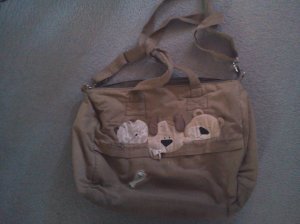
An overly sentimental tribute to the most loyal of tote bags, having suffered years of oppression serving an overwhelmingly careless and demanding owner.


照片1186

Oh, how I’ll miss you!

In dedication to my bag,
My bag, from which
Its love and support
Its enduring reliability
Has given me strength to carry on.

From the trials of senior high school
To the lethargic years of university,
You have been there
Always by my side
Always faithful, never complaining.

And now!
Now!
You are gone.
Seven years of companionship,
Usurped by gifts from well-meaning friends.

You will never accompany me again
During those sleepy mornings
On the trains
Filled with faceless people
Gearing themselves up for the day.

During those late nights
Full with food and dessert
Full with friends and company,
And anticipating the warm embrace
Of a shower, and a bed.

You have been a pantry,
A receptacle of drool,
A lap blanket,
A travelling wardrobe,
A carrier of everything and anything,

You have gone above and beyond your calling
Where all other bags would have failed.
You are the bag to end all bags,
And you will be missed.
Farewell.


Hyakunin Isshu No. 2: Spring has past

By: Empress Jitou (645 – 702)                                      持統天皇

Spring has past                                                                 春過ぎて
And summer begun;                                                        夏来にけらし
The strange, shining                                                        白妙の
Robes of royals dry –                                                       衣ほすてふ
At Kagu, perfumed mountain of the sky                  天の香具山


In Japanese history, there were only ever eight empresses, and Empress Jitou was the third.  When I say empress though, they were only ever regents, people in power until a suitable emperor was chosen, or grown-up, because Imperial Japan follows male succession.  Following that vein, Kagu Mountain is the mountain of a stone door behind which resides the Sun goddess, whom, in Japanese religion, bore the first Japanese emperor.  Which means that all Japanese royalty are descended from gods, supposedly.

In the poem, my translation notes says that the speaker merely realises that spring has passed before they knew it with the mention of drying summer robes, and Mount Kagu is there to give the poem imperial symbolism, and as a hint that the poem is about succession.

I agree about the succession, and the fact that it is written by one of rare female empresses means, to me at least, that the poem is about what the Empress Jitou feels about passing  on her rule.  The passing of Spring – the promise of new beginnings and refreshing – and the beginning of Summer – strong with the pulse and energy of life – means that she is either realising that she was only there like Spring to pave the way for the ‘true’ emperor, the Summer, or that her reign has already entered its peak and she will soon have to abdicate her rule to the following emperor.

KisaragiChiyo | DeviantArt

KisaragiChiyo | DeviantArt

In any case, I feel that, despite the brightness and vivaciousness of Summer, Empress Jitou is feeling nostalgic for the power that she only temporarily has, and that looking onto the bright summer robes drying in the sun has woken her to the inevitability of the passing of time.  However, it also gives off a sense of purpose and of hope, that she is here to prepare the way, and that her work during her rule will be fundamental in maintaining a strong Japan and will stay as a guide for her successor.

And who hasn’t felt like this before? Feeling the inevitability of moving on… losing the powers of being in the highest grade as you graduate from primary school, losing a sense of innocence and being a child as you graduate from high school, losing a sense of freedom as you graduate from whatever and enter the work force… we may not ever lose the powers to rule a country, but every time we move on from one stage of life into the next, the same sense of helpless nostalgia for lost times and the hope that we have for the future is and will, I believe, remain the same.

Hyakunin Isshu No. 1: Harvest-time in the field

By: Emperor Tenji (626 – 671)             天智天皇

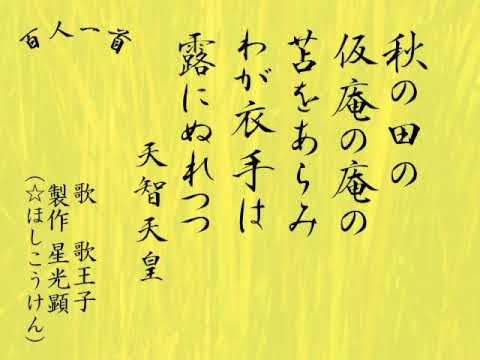
Harvest-time in the field                      秋の田の
A hut that’s coarsely-thatched          かりほの庵の
An autumn refuge –                              苫をあらみ
My sleeves                                                 わが衣では
Are wet with dew                                    露にぬれつつ


Supposedly, the emperor was inspired to write this poem when he was scaring birds away while harvesters were gathering crop in the fields.  However, sudden rain forced to him to take shelter in a thatched hut that offered zero protection from the rain anyway, and so he and his sleeves became wet.

According to my translation, the vignette is of a hard working harvester wiping away his sweat with his sleeves as he takes a rest in a hut.  Or that the speaker is separated away from his love as he sits alone in a hut, wiping away his tears with his sleeves.

Since the Japanese are all for meaning upon meaning, layer upon layer, I personally like the idea of the forlorn lover in a hut.

And since Autumn is a symbol of loneliness, of drifting away from the warm brightness of Summer, and harvesting is usually a solo activity, who knows? The Emperor could have been travelling on the road, passing by fields full of lone harvesters and something unexpected forced him to take shelter in a road side hut, delaying his return to the side of his beloved person.

HoshiKouken | Youtube

HoshiKouken | Youtube