On the Road to Japan, Pt. IV

Packing is such a chore.

How do I decide just how much I should bring of everything?  When do I decide that too much, is too much?  Where do I say stop to bringing little things that don’t really amount to much, until I’ve brought too many and it’s taken over half of my suitcase?  What do I bring, and what do I buy when I get there?

I mean, for camps and short term trips, it’s easy to pack for.  After all, it’s over in a week, and things aren’t essential when you can return to it in five days.  I used to laugh at how much my mum always wanted to pack when I left for these things, but now I wonder how my mum has packed for all those long extended family trips and known just how much we needed for each trip.

Especially since she had to pack for three people.  I’m only packing for one, and I’m struggling.

This just makes me realise how much I don’t ever want children or any sort of dependents.  Or they can pack their own things (nekminnit the kids pack an entire suitcase of candy and toys and there’s nothing practical whatsoever inside the case.  Worse, they bring toy guns and warfare toys and we all get detained at the airport).

And how do I pack away the things that are intangible? In-jokes and impromptu DnMs? Those Looks between friends? Meeting gazes across a crowded room and making faces at each other before bursting into laughter?  The warmth from a multitude of hugs?  I know I’ll meet new friends and these will happen anyway, but it’s not the same.

Having said that though, it will be great to be away from everyone familiar for a year.  People are going to change, relationships are going to change, I’m going to change, and all these changes will make something new and something fresh and it will all be very exciting to reacquaint myself with the familiar and be pleasantly (hopefully) surprised at how fresh everything has become.

And now I’m going to stop, because I’m starting to sound like a twelvie on tumblr philosophising on life.  Let’s see what I say when I look back on all this when I come back in a year’s time.

Three more days to go!
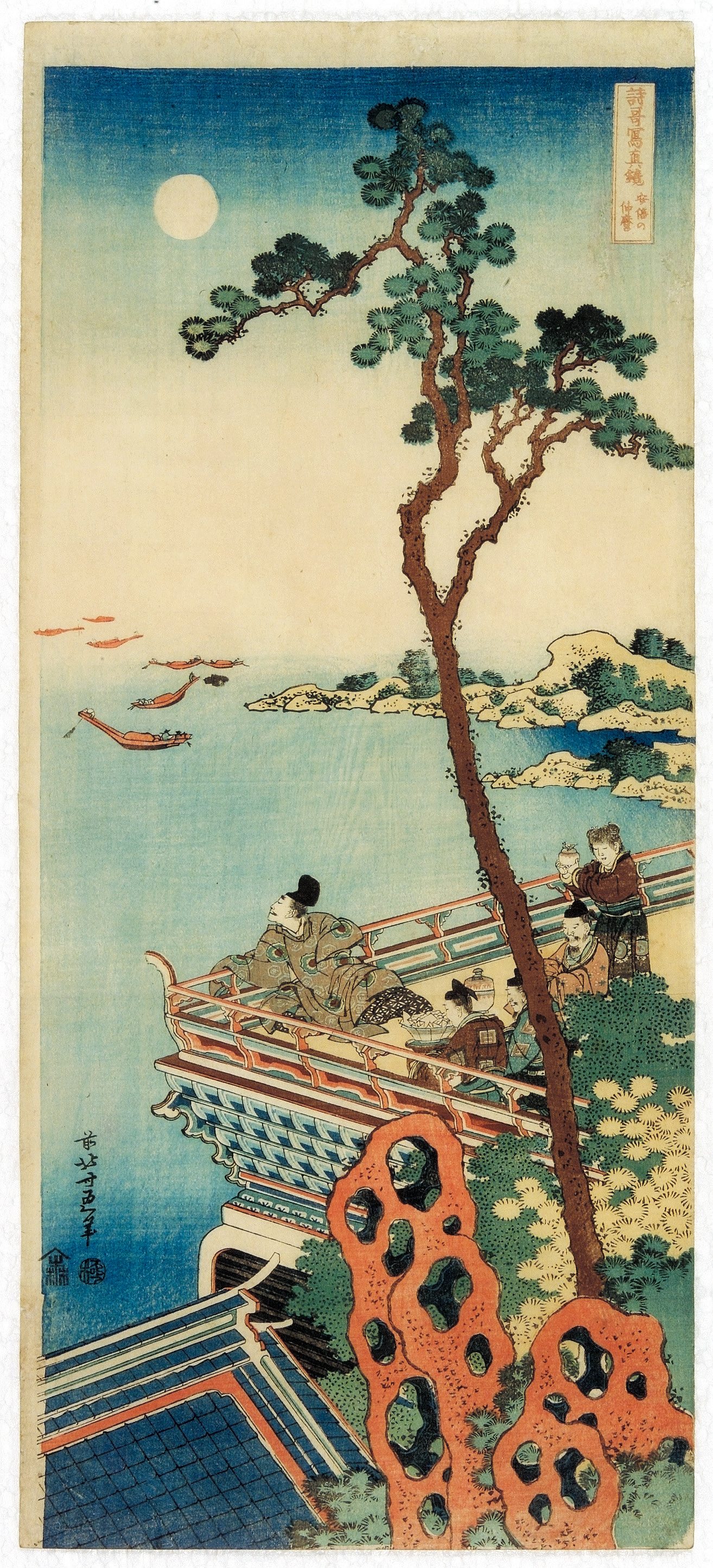
Hyakunin Isshu No. 7: The Sky’s Meadow Above

By: Abe no Nakamaro (701 – 770)                             阿倍仲麻呂

I gaze into the distance                                                天の原
And the meadow of the sky above                           ふりさけ見れば
Becomes the Kasuga Shrine                                      春日なる
On Mount Mikasa                                                            三笠の山に
In the coming moon                                                      出でし月かも


Abe no Nakamaro | Katsushika Hokusai | Galerie Zacke

Abe no Nakamaro | Katsushika Hokusai | Galerie Zacke

Abe was descended from a previous emperor, and growing up was applauded for his academics and intelligence.  Since he was active during the Nara period, as a smart young man he became part of the mission to China during the Tang dynasty.  Somehow or other, he was the only person to stay, and became an official Chinese.  He first tried to return to Japan when he received a Japanese employ, but his ship sank not long after leaving China.  When he attempted to return to Japan again after several years, his ship was wrecked again.  After that, he gave up trying to return to his homeland, instead becoming a high class Chinese official and living the rest of his days in Hanoi (then part of Chinese territory).

Abe never really lost his academic prowess, and was a prolific writer and close friend of prominent Chinese poets.  However, although he lived quite successfully in his adopted land, Abe never really forgot his homeland, and this tanka is supposedly written at his farewell party before his second departure.  In my notes, this tanka is apparently a reflection of his reminiscing about how he prayed at Kasuga Shrine (a symbol for departure in Japanese classical literature) for a safe trip to China, and seeing the same moon that now hung in the sky before him.

Katsushika Hokusai | Fine Arts Museum of San Francisco

Abe no Nakamaro | Katsushika Hokusai | Fine Arts Museum of San Francisco

The intense longing for Nara, his homeland, the anticipation that he must have felt at finally being able to set homeward bound, the stillness and quietness of the night as it enveloped him in memories.  Nothing is quite like home, and the fact that he never really made it back to his beloved Nara is kind of (read: very) heartbreaking.  He wanted to stay for a while, and ended up staying forever.  For everyone who has been on long long holidays, or lived overseas, or been away from home for extended periods of time, I’m sure there have been times where you just wanted to go home.

And Abe never really got to go home.  Sure, he became a Somebody in China, with the career and the friends, but this tanka just shows how much he missed Nara.  It’s not evident in the translation that my book provides, but an alternative translation reads this:

When I look up into the vast sky tonight,
is it the same moon that I saw
Rising from behind Mt. Mikasa
At Kasuga Shrine
All those years ago?

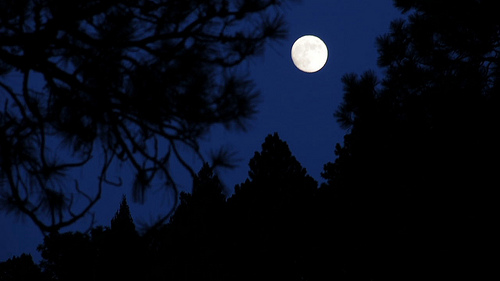
And I can’t help but think about my own imminent departure for Japan, and the moment that I realise that I’m not quite home, that home is far far away, and I wonder how this tanka will feel then, when I gaze up at the sky at the moon that is shining on the distance that separates my home from me.

optictopic | Flickriver

optictopic | Flickriver

On the Road to Japan, Pt. III

I was expecting more at our pre-departure briefing a couple of days ago, to be honest.  I mean, even though I knew it was probably all filled with information that I knew or I could find out myself on documents they posted online, but really, they are sending students off for a year into an unknown land.  And being part of the Japan major, they’ve already sent off thirteen (I think) other sets of students off in similar meetings, and this is hardly the first year that they’ve run the program, sooooooo you would think they’d have more pertinent information or whatever.

But no.  The only thing we learnt, or got, was our airplane tickets.  The insurance stuff, they had covered in a previous meeting last year.  The things about the airplane things, they could’ve covered in five minutes, since the information is all typed up really neatly on a sheet.  The information about our actual major, all online in the subject folder thing on the uni system.

Ah well.  It’s obligatory, and it’s a chance for them to make sure they’ve said and covered everything, so that if we have any questions or mess up, they can be all like WE TOLD YOU SO and laugh in our faces.

It was also great to see and meet up with everyone that’s going on exchange with me, because it’s probably the last time I’ll see them before I either see them in Japan, or when we come back, or… never… XD

Anyways, I guess the meeting kinda made it a bit more real, because seeing the actual ticket makes it a bit more substantial in my head, and it’s kinda hitting me not really, but definitely, I’m feeling it more than this time last year.

Being able to finally get my visa also helps.  I’ve heard the photo turns out really ugly.  Hopefully it’s not too bad, but I’m not expecting much… especially since photos for these official things never turn up nice anyway so ah well! Whatever! Once I get it next week, I’ll know!

Hyakunin Isshu No. 6: On the Bridge that Magpies Cross

By: Counselor Otomo no Yakamochi (718 – 785)
中納言大伴家持

On the bridge                                                      かささぎの
That magpies cross                                          渡せる橋に
The frosty white                                                 置く霜の
Is laid across                                                       白きのみれば
As night grows old                                            夜ぞふけにける


Finally! After two tanka without translation notes, this one does, and with two relatively lengthy paragraphs too wheeeeeeeeeeeeeee but first, introduction of the poet!

Counselor Otomo was active during the Nara period as a Japanese statesman and prominent waka poet.  Although he never quite made it to the level of becoming a god of poetry, his skills did qualify him as a member of the Thirty-six Poetry Immortals (三十六歌仙), being proficient at not only writing poetry, but also transcribing, rewriting and refashioning ancient poems and folklore.  Otomo was the most prolific and prominent writer of his time, and as a result was one of the compilers of the Man’yōshū, the first Japanese poetry anthology created, and had a great influence on the Shika Wakashū, an imperial waka anthology.

Magpies | Warren Photographic

Magpies | Warren Photographic

So.  Moving on to the actual tanka

According to the notes, the bridge that the magpie crosses could be symbolic of the night sky, as the black-and-white colours of a magpie is reminiscent of the streamers of stars trailing across the night sky.  Another reference to the night sky could be the white frost, which could symbolise the swirls of star dust between the clusters of the stars.

Supposedly, another layer of meaning to the tanka is to view the magpies as representations for Japanese people secretly meeting their lovers on a lonely bridge during the night, white frost building up as the night grows old.  Since this mode of communication was apparently very very common in the Japanese aristocracy, Otomo probably wrote it with both meanings in mind.

And it could be true, since the legend for the tanabata festival is based on the meeting of two separated lovers, who can only meet once a year from their exile on opposite sides of the world, with the road between them a bridge of flying magpies.  That explains both the magpies as an arc in the sky and looking like the stars of the Milky Way, and as a symbol of the secret meetings between lovers during the deep hours of the night.  However, since tanabata is traditionally celebrated in July, which is summer in Japan, I wonder what inspired Otomo to reference this legend in the depths of winter, as snow heaped along the shores and across bridges…

Tanabata | overdoor | zerochan

Tanabata | overdoor | zerochan

On the Road to Japan, Pt II

There’s now officially twenty-one days until my departure for the Land of the Rising Sun.  I thought I would find out when I left a lot later, but somehow or other they told me early.  So here we are.

Twenty-one days to go.

And on hearing that, EVERYONE ups their compulsion to ask me the same questions:

‘Are you excited?’ (No.  And then they tell me they’re excited for me.  Why, thank you.  Please continue to be excited for me, because then I’ll start feeling somewhat excited too).

‘Have you packed yet?’ (No.  And I doubt I will be until right before I leave for the airport.  Three weeks is so far awayyyyyy.)

‘Are you ready?’ (Probably not.  But I’m not sure what I need to be ready for anyway, so I’m going to say yes.)

Although I have started moving things I want to bring into the lounge room so that I don’t forget to pack it later, because it’s okay for me to spread my belongings all around the house, since it’ll be gone in three weeks anyway.  And I have started making lists of what I want to bring.  People who just came back from the exchange all tell me, ‘Don’t bring too much!’ But what is too much? I’m packing for a year… where is the line between too little, and too much?

I suspect buying a $5 fleece blanket throw thing is probably considered ‘too much’.  But it’s comfortable.  And it’s red.  I can suffer how to bring it back once I get to it, this time next year.

Anyway, not much is still yet happening.  I feel like I’ve just been waiting it out, these last few weeks, because I don’t really know what to do to prepare except quietly catch up with friends and buy essential things like cameras and laptops (because tech is obviously the most essential thing to my life hahaha).  I’m not feeling any sort of excitement yet, because it still hasn’t really sunk in that I’m leaving in three weeks.  And I have no schedule to follow. There are no classes to fill up my days, work is sporadic, and there are no events to plan, no meetings to go to.

This freedom is what I imagine retirement to be like.  Nothing to do, just waiting my days out.  Except the journey at the end of the waiting is different.

The only things that I have been planning are the holidays and trips that I plan to go on, which shows exactly where my priorities are, when I don’t even know what the academic calendar looks like.

Ah well.  The pre-departure briefing is in a week, and I hope that gives me more of a framework to base my excitement on.  If not… I’ll just keep lazing around living the phetlyf until I realise there’s only ten hours till my flight and my suitcases are still empty.

Hyakunin Isshu No. 5: In the Mountain’s Heart

By: Sarumaru no Dayuu (active ~ 708 – 715)   猿丸大夫

In the mountain’s heart                                           奥山に
Through crimson leaves                                          红葉ふみわけ
A trampling deer lets out a cry                             鳴く鹿の
A voice that is heard                                                 声きく時ぞ
In Autumn sadness                                                   秋は悲しき


Compared to the preceding poets in this anthology, Sarumaru is relatively unknown.  The only things really known about him is that he lived no later than 800AD, and that his time active as a Second Assistant Minister was from approximately 708 – 715.  Apparently, he was also a member of the Thirty Six Poetic Sages (according to Wikipedia).  However, there’s so little known about him, that some scholars suggest that this Sarumaru never really existed, and was instead an alias for Prince Yamashiro no Oe (also according to Wikipedia).

IMG_0420

Deer in autumnal forest | Pinterest

In any case, this tanka that Sarumaru has created is a classic example of Autumn poem (秋歌).  Although there are, once again, no notes on this tanka, it is clear that both crimson leaves – presumably maple – and deer are symbolically synonymous with Autumn in Japanese culture.  And with the deer’s cry ringing through the sadness and emotion that the poet can feel, you can almost feel the sadness for the passing of Summer and warmer, brighter times and the loneliness that the port anticipates with the onset of harsh Winter.

What’s interesting though, is that the last tanka expressed the awe-inspiring beauty of cold clean Winter, while the beauty of Autumn is described here with a little melancholy. Even though both poets were inspired by different emotions as they absorbed scenic nature surrounding them, already it is clear that nature and scenery and the environment and things are important to Japanese culture.  And now that I’m soon going to be in Japan, it’ll be amazing to see how it translates from these ancient tanka to modern Japan.

One-Month Anniversary

At first I was afraid, I was petrified.  Thinking I couldn’t live when you entered my life.  But I’m spending oh so many nights, thinking how you’re alright, and I grew strong, and I learned how to get along with so many things from Earth to space, connected and contactable with one touch of your face…

I really should have changed my views, or made myself quit my ways, but I’m still confused, I still don’t really want you!

It’s been a month; I have survived, but there are changes to my life that I am not sure that I like!  I still can’t call but I can check, and I go on when there’s wi-fi and talk and snap my friends, but I can’t see the world beyond the glare of the screen. The outside dissolves as I delve into a reality that exists as 0’s and 1’s and unseen threads through time and web and space and it is hard to disconnect when there’s always someone online.

When there is no wi-fi, you’re just another phone.  A phone that works in swipes and not in the press of a key.  There are many many apps that help my life get ‘better’, and I appreciate them all, but do they really make me better?

But in the end, I just can’t help it.

In my heart your cons outweigh your pros; I’ve got no self-restraint. At the start, I only wanted Maps, and now I’ve got SnapChat and Instagram and Twitter and WhatsApp.  I don’t use a lot of them, but it’s still there to tempt, when I’m just sitting there and there’s nothing else to do.

And don’t get me started on Messenger.  I swear everyone’s on that, and they’re always online.  I put you away for a second, and I turn back when I’m free and there are fifty million messages just lighting up your screen…

I don’t regret you.  I don’t hate you.  You have your moments when I love you and it’s really just divine.  But a lot of the time you are a gateway down a road that sucks up all my time and takes away from my life in the world.

So I appreciate your presence, and I’m sure that it is because it’s only been a month, that I am still in a whirlwind of emotions, and we’re still in our honeymoon phase, and after this phase is over, I won’t be reliant anymore.  You will just be another phone, and just another tool in life, and you will fade into the background to support me as I live.

Happy one month, my iPhone. And happy Valentine’s Day, I guess.